But most of all, I got to do it all with great family and friends (sappy, I know, but true). So thank you all for a fantastic year. 
 My mother, the artist, (right, with a local boy) looks everywhere and sees compositions, potential drawings, and textures just waiting to be juxtaposed in her latest designs. As my father and I galavanted over the ruins at Pisac, my mother sat perched with her pen and graph paper, just trying to take it all in (i.e. the landscape, the ruins, the light, the textures).
 Our first trip up the mountain, we went up late and quickly lost the light (we had spent far too much time bargaining in the markets below), and had to cut the trek short or be caught on the mountain in the dark. But the views were so incredible (and my mother had so many images she wanted to draw), that we went back the next day. (That´s my dad, left.)
 The ruins at Pisac are in three sections, perched, integrated seamlessly into mountain peaks that overlook the Sacred Valley below. Though physically, there are no similarities, the site reminded me of how I felt about Beng Melea in Cambodia. Beng Melea is a temple more than an hour outside the Angkor Wat complex, and even though its design is not as grand as those of the more famous temples, its setting, integration with nature, the fact that we (E&K and I) were among the only people there, made it the gem of my time in Angkor. I have a feeling I´ll feel the same way about Pisac . . . I´m sure Machu Picchu will be breathtaking, but getting to explore these ruins with my dad in the splendor and silence and sunshine of the Andes is simply one of the most amazing things I´ve ever done.


 Today was Inti Raymi, the Incan festival of the sun and Cuzco´s biggest festival of the year. My parents arrived early in the morning after an overnight flight from Chicago. So while my mother took a much needed nap, my dad and I headed down to the old Incan Temple of the Sun, where Peruvian soldiers in Incan costumes danced for the opening ceremony of the festival (right). The crowd was packed with tourists and tour groups. While I didn´t want to sour the experience for my Dad, who was just soaking up the glory of the Cusqueño streets, I couldn´t repress an internal groan at the commercialism. I had already been ambivalent about whether the festival was just a stunt for tourists or whether it was something that had real meaning for the Cusqueño people. This did not seem to bode well.
 It turned out that this year, a good portion of the hills had been cordoned off with caution tape, and those who couldn´t pay for seats were confined to a spot more than 300 meters away where nothing of the ceremony could be heard. Cops were posted on the hill tops (see picture above) to keep the non-paying set in line and we saw the occasional rogue visitor chased with what looked like clubs. The huge crowd (which had about a 65/35 ratio of Cusqueños to Gringos) briddled under these restrictions. Then, all at once, people began to rush the caution tape and make a run for the vacant parts of the hill (right). The cops were quickly overwhelmed by their numbers and within minutes the landscape was transformed the from that in photograph above to that in the photo on the right. It was AMAZING to watch, and the people roared their triumph as the cops finally acquiesed. And I had thought that the local Cusqueños didn´t care about the festival.
 When my folks (left) and I got to the field where Gaby´s friends had their Wata, it looked like groundhogs had run amok - there probably more than 200 Watas just in that one area, in different stages of completion. Tens of hundreds of families were outside grilling meat, eating potatoes, playing volley ball, riding mules and thoroughly enjoying their holiday from work (everything in Cuzco was closed for Inti Raymi). This was truly Inti Raymi as the Cusqueños celebrate it. Gaby´s friend´s welcomed us with open arms, pounds of potatoes and freely flowing Inca Kola and Crush.

 But our true attraction to Tipon are the Cuyerias at the base of the mountain. Cuy, or guinea pig, is one of Peru´s national dishes. And like Inca Kola, they say you´ve got to try it before you leave the country. The trick is to make sure you are acutally eating a guinea pig. Cuy is actually fairly expensive these days and I was forewarned in Lima that if I see cheap cuy on the street for anything less than 12 soles ($4), it´s probably a rat.
  Now, I never had a guinea pig as a pet, so in principle, I´ve got no problem with eating one. (Jackie felt VERY differently and could barely bring herself to go to the cuyeria, and Erika wouldn´t mind eating cat even though she has one.) My problem was rather with having the anguished face, complete with teeth staring at me throughout the meal. I also had difficulty ignoring the charred curled little feet which stuck out stiffly. Erika just kept repeating to herself, ¨Rats have pointier faces, rats have pointer faces.¨In the end, not only did we manage to taste it (its a bit gamey and wee bit tough, though the seasoning was quite impressive), but we managed to clean off a good portion of the meat (not that there is a ton . . . the cuy is mostly bones.) Proud of ourselves as we were, I don´t think any of us need to do that again any time soon.
  On a whim, Erika (the North Carolinian), Sonya (a french woman), and Julian (Soyna´s 9 year old son) decided to visit ruins around the town of Maras after classes got out at 1. So we crammed ourselves on another minibus. An hour and a half later we were dropped off in the middle of the Sacred Valley, at the turn off for the road to Maras. A single (tiny) cab was waiting to take tourists like us to nearby Moray (right). That would have be just fine, except that two other women had also disembarked in search of a ride. The women crammed into the front seat with the driver and Erika, Sonya and I squished in the back with Julian draped across our laps.
 Then, suddenly, a cop in full uniform approached from behind the car - he too had just gotten off the bus. He rattled off something quick and incomprehensible in breathless Spanish and the driver (reluctantly) got out of the car. The policeman took his place behind the wheel. We had no idea what was happening. Crammed in as we were, it took some manuvering to turn around and see that the previous driver had popped the trunk and propped himself inside.
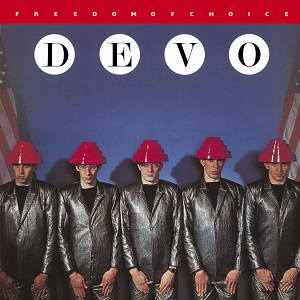
 Moray takes Incan terracing to a whole new level. The site looks remarkably like an inverted version of the red hats that Devo was famous for in the 1980´s. The land has been carved into a circular bowl with graduated levels, and each apparently has its own micro climate. Archeologists hypothesize that the Incans used the site figure out which altitude was best for growing which crops. At the bottom of the basin, Erica and I (left) found a forest of multi-colored grains growing more than six feet tall.

 On Monday, I finally started my formal Spanish classes at tiny school called, predictably, Macchu Picchu Spanish School. Yes, I´m actually voluntarily waking up at 7 am every morning, to get school on time and take 4 hours of classes a day. And even more, I´m voluntarily spending my afternoons making and running through flash cards of verbs and their conjegations. But, then again, I´m doing it in cafes that overlook colonial plazas, so I guess my life is not that rough.
 Finally, the other students are fantastic. I live with Erika (from North Carolina), Julie (from France) and Jackie (from England). I suppose Julie has reasons to dislike me as I took over Octavio´s room (he´s a gorgeous Brazilian who she just started dating) and he moved out, but she´s fantastic. After our welcome dinner last night, students and professors alike made their way to a dingy basement Karaoke bar, where we belted out some fantastic 80´s classics (the words on the prompter were hysterically incorrect) and struggled through some of our favorite spanish pop. Plus, Octavio sang Julie a love song. (left)
I´ve got singing til I´m hoarse down pat, and I can even translate the occasional sappy spanish love song (not so different from sappy American loves songs, it turns out.) Now, if I can just master future tense, I´ll be golden . . . .
 For our last hurrah before Darin made his his way back to the good 'ol USA (yes! he made it back safely!), the two of us decided to venture outside the charmed city of Cuzco in order to explore part of the near-by Sacred Valley, home to Incan ruins and quaint Andean towns galore. Our target? Pisac, which just happened to be hosting its famous market that day. (A Coincidence? Unlikely.)


 After spending some quality time languishing in cafes, we decided to go off in search of the non-tourist hub of the city. It was actually incredibly refreshing to find a thriving city outside the usual gringo haunts. We found bustling food markets and outdoor malls withwell-priced kicks - shoes - that would have made E´s heart patter (Darin´s heart didn´t skip a beat. Who would have thought cousins could be so different?). Perhaps the gem was the hopping Jesus of Nazareth Commerical Center (left).
 Labor nerds that we are (we have both spent the last few years working for the same labor union), we were also fascinated to come across Cuzco´s hiring hall. Then, last night we had drinks with the Vermonters who were on our Lake Titikaka trip. They filming a documentary on mining in Peru (copper, silver and gold are the country´s main exports and mining ranks with tourism as one of the largest industries in Cuzco.) Since we last saw the two of them, they´d interviewed 5 different Mayors in the Cuzco region about the environmental impacts of local development. The mayors relayed their frustation at how development has tainted their water supply, and the fact that little of the profit from the newly privatized, foreign-owned mines stayed in the country. The scenario sounded hauntingly familiar (SEIU´s workers in the US have very similar greivances).
 When we were told that Cuzco, gateway to the famed ruins at Macchu Picchu, was more touristy than Arequipa, we were aprehensive. What we weren´t told is that it is absolutely fantastic. Nothing can take away from the wonders and charms of the small towns we visited in Colca Canyon and the islands. But if I am going to spend 20 days in a town in Peru (including my time with Darin, my spanish classes and my parents´ impending visit), I am glad it´s this one. Can you say Plazas? Cathedrals? Mountains? Live music? Fresh Vegetables?
 Darin and I had been packing tons of sights into each and every city/region we visited and, upon seeing Cuzco spread before us (our hostal is on a hill), we decided it was time to chill out and simply spend 3 days doing a thorough investigation of the innumerable cafes, bars, and restaurants. After all, this is vacation! We´ve read (fiction!) on balconies, drunk absurdly sweet coffee (left), watched Argetinian jam sessions and wandered through markets. I also may have dragged him into every courtyard fabric vendor, pottery store and artisan shop this side of San Blas Plaza.
 Peru is known for both its knitted Alpaca wool crafts and for freezing unsuspecting tourists in the mountains (since it´s in the southern hemisphere, it´s winter down here). Knowing that we were going to be spending a lot of time on a windy boat, Darin and I indulged in the necessary accessories: knitted hats with Llamas on them and knitted rainbow gloves. Our past and present SEIU employees (or other SEIU fans) will be happy to know that Darin´s gloves have a purple middle finger.
 We managed to find a Captain who actually lives on one of the islands (Amantani) and who would take us to 3 different islands and put us up overnight with an Amantani family. Not only was this MUCH cheaper (read: $10 bucks) than the main tourist agencies, but we got to feel good about giving our money directly to the indigenous people instead of to semi-explotative mainlanders. Also on the boat with us? Two hilarious Canadians, 3 German girls and 2 more Vermonters.
  The first stop was at the floating islands (above, right). The islands are about 30 feet square and litterally float in the middle of the lake. The ground is woven of boyant reeds (so it´s springy under your feet!), as are their houses and the boats. They take years to build and they are anchored by ropes attached to rocks. We took a ride in one of the reed boats and were seranaded by some of the local girls (left), who sang us the English songs they´d learned in school.
  But the best part was staying on Amantani. We finally found a place that wasn´t overrun by tourists! We hiked up the highest hill, past women herding innummerable sheep, to the pre-Incan ruins of Pachamama and oggled the lake from above. Then to celebrate, we wandered down into the main square and drank Cusqueña beer (soooo much better than Arequipeña beer) with the local 20 somethings, who, again, told us how much they loved Obama. (When we asked why, they told us that he was joven - young - and moreno - dark skinned. We smiled and nodded.) The family we stayed with (friends of the captian´s) was lovely and generous. They fed us and then gave us about 50 pounds of blankets to battle the cold night. . . . they were so heavy, we could barely even roll over beneath them. And when we woke up at the ungodly hour of 7 AM (after 10.5 hours of sleep) it was to a spectacular view of the saphire lake.
  Darin and I just got from a 3 day hike through Colca Canyon - the deepest canyon in the world. We were with a group of 6, and the others included two 6´+ guys who just got out of 6 years in the Navy and 2 native Vermonters who were used to climbing the Green Mountains in their own back yards. Darin and I were the two city slicker interlopers who suddenly felt way out of their league. (Well, I was intimidated anyway. Darin was eager to show of his newly rehabilitated ankle.)
 The hike back up the mountain was one of the hardest things we´d ever done: 1,100 meters (that´s about 11 football fields) of sustained uphill climbing with no breaks. Here´s a photo of a portion of the zig zag we trekked up. It took the navy boys 2 hrs 5 mins, Darin 2 hrs 40 mins, me 3 hours, and one of the Vermonters 3 hrs 15 mins. I actually wasn´t last! Frankly I was proud just to make it up. Then, when we got back, our tiny 4´11" hostel owner, Carla, shamed us all by telling us she made it up in 1 hr 45 mins.
 Coca tea, made from the leaves of the Coca plant, is the traditional cure for altitude sickness around here. Darin was the first to indulge. So I couldn´t help singing him one of my favorite songs about a certain curious Mammoth (thanks Elisita!):

 Darin got in on Sunday night and Monday morning, we headed out to Arequipa, a town in the Mountains along the south coast. The town is beautiful, built mostly of Silar, or volcanic rock. And in fantastic contrast to the white stone, the interiors (especially the those of the convent Santa Cantalina, which is a whole city within a city) are painted with vivid colors. I spent a good portion of this afternoon grinning ridiculosly in appreciation.
 The catherdals are also divine, but perhaps the most striking things about them are the paintings within. Everytime the last supper is featured (and it´s featured a lot), the meal consists, not of bread and wine, but of traditional Peruvian fare: Cuy (guinea pig) and chiles. Anyone hungry?
 Among the other fine peruvian dining options is Inca Kola, which Darin insists I try at some point before I leave. It´s the color of Mountain Dew on a bad day and (reportedly) tastes like bubblegum. My intent is to avoid it as long as possible. We´ll see how long I can hold out (he´s very tenatious). For now, my lips are sealed.